

























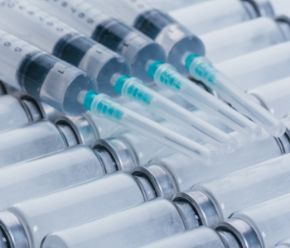


Prefilled saline flush syringes are routine purchasing items for many hospitals, clinics, surgery centers, infusion programs and other healthcare facilities. Because they are used in high-volume workflows, even a small difference in product configuration or case packaging can create a significant purchasing or inventory issue.
For procurement teams, the objective is not simply to find a listing that says "saline flush." Buyers need to confirm that the requested product and quoted product match on the specifications that actually control compatibility, receiving, stocking and use.
Treat a prefilled saline flush syringe as a specification-driven medical product, not a generic syringe. Verify concentration, fill volume, syringe configuration, intended use, labeling, manufacturer number, packaging and unit of measure before comparing price.
Solution
Concentration
Verify the requested sodium chloride concentration, such as 0.9%.
Volume (Actual Fill)
Confirm how much solution is supplied in the syringe.
Configuration
Check syringe capacity and connector configuration separately from fill volume.
Identification
Preserve the exact product number (Manufacturer Number) during RFQ and substitution review.
Packaging
Confirm the quoted unit (EA, BX or CS) before comparing prices.
Inventory
Calculate total syringes per case before setting par levels or comparing suppliers.
What Is a Prefilled Saline Flush Syringe?
A prefilled saline flush syringe is a single-use syringe supplied with a measured quantity of sodium chloride solution already contained in the syringe. In the United States, saline vascular access flush products are regulated medical devices, and product-specific labeling establishes the intended use of the individual product.
For purchasing purposes, buyers should distinguish these products from empty syringes, saline vials, irrigation products and other sodium chloride products that may have similar descriptions but different intended uses.
The Specifications Buyers Should Verify
| Specification | Why It Matters |
|---|---|
| Solution concentration | Confirms that the solution matches the requested product, such as 0.9% sodium chloride. |
| Fill volume | Identifies how much solution is actually supplied in the syringe. |
| Syringe size or capacity | Should not automatically be assumed from the fill volume. |
| Tip/connector configuration | Helps determine compatibility with the facility's intended access-device workflow. |
| Sterility & package integrity | Must match the product specification and facility requirements. |
| Manufacturer/labeler number | Reduces the risk of ordering a similar but different configuration. |
| Unit of measure | Determines whether the quoted quantity represents individual syringes, boxes or cases. |
| Case pack | Affects receiving quantities, storage, par levels and price comparison. |
| Expiration dating | Important for high-volume inventory planning and receiving requirements. |
10 mL Saline Flush Syringes: What Does "10 mL" Actually Mean?
A purchase description may refer to the amount of saline in the syringe, the nominal capacity of the syringe, or both. Review the manufacturer's product description and technical documentation before treating two products as equivalent.
This distinction becomes especially important during substitutions. A proposed alternative should be compared line by line against the original specification rather than accepted because the broad description appears similar.
Do Not Use Syringe Size as the Only Compatibility Check
Clinical policies and the instructions for the applicable catheter or needle-free connector determine how a flush product is used. Procurement personnel should therefore avoid converting a general size preference into a universal compatibility claim.
Understanding Box and Case Quantities
Essential Cares SS1010
The Essential Cares catalog lists its 0.9% USP 10 mL prefilled saline flush syringe, item SS1010, as 30 syringes per box and 8 boxes per case.
View the Essential Cares 10 mL 0.9% USP prefilled saline flush syringe →
Why Manufacturer and Product Numbers Matter
Descriptions in ERP systems, distributor catalogs and bid spreadsheets are often abbreviated. A manufacturer or labeler product number gives buyers another reference point when evaluating whether the offered product is the requested item.
When a solicitation specifies an exact manufacturer number, procurement teams should not remove that identifier during quote comparison. If an alternative is proposed, the original number and proposed substitute should both remain visible so the two products can be cross-referenced.
Common Ordering Mistakes
Box vs Case
A lower quoted number does not mean a lower unit cost if the selling units differ.
"10 mL" Assumptions
Confirm fill volume, syringe configuration, product number and labeling.
Missing MPN
Removing the original manufacturer number makes substitution review less reliable.
Wrong Product Category
An empty syringe and a prefilled flush syringe are separate products.
Catalog Listing vs Availability
A live product page establishes that a product is cataloged. It does not establish real-time stock. Confirm availability and lead time when delivery timing matters.
Procurement Checklist for Prefilled Saline Flush Syringes
- Confirm the requested concentration.
- Confirm the actual fill volume.
- Confirm the syringe size and configuration.
- Record the manufacturer or labeler product number.
- Verify the product's intended-use labeling.
- Confirm individual, box and case quantities.
- Normalize pricing to the same unit of measure.
- Review current expiration requirements when applicable.
- Confirm current availability and lead time.
- For substitutes, compare technical documentation before accepting equivalency.
Related ECSI Resources
Syringes & Needles
Essential Cares Saline Flush
Conclusion
Prefilled saline flush syringes are high-use products, but they should not be purchased from a description alone. Concentration, fill volume, syringe configuration, product identification, packaging and UOM all influence whether a quoted item actually matches the requirement.
For institutional buyers, documenting these fields at the RFQ stage makes price comparison easier and reduces avoidable substitutions and receiving discrepancies.
Need Help Sourcing Saline Flush Syringes?
Essential Cares Supplies can assist with current availability, institutional pricing and product cross-reference requests for saline flush syringes and related syringe products.
Contact Essential Cares SuppliesFrequently Asked Questions
What does 0.9% mean on a saline flush syringe?
It identifies the sodium chloride concentration stated on the product. Buyers should confirm the complete labeling and intended use of the specific product being sourced.
Is every 10 mL saline flush syringe interchangeable?
No. Buyers should compare fill volume, syringe configuration, manufacturer number, labeling, packaging and the requirements of the applicable vascular-access system before treating two products as equivalent.
How should buyers compare box and case pricing?
Convert every quote to the same base unit. If a case contains 8 boxes and each box contains 30 syringes, the case contains 240 syringes.
Should a procurement team verify current inventory before ordering?
Yes. A catalog listing should not be interpreted as confirmation of real-time stock.
 213-743-1401