
























By Kevin Leoncio, Account Representative, Essential Cares Supplies, Inc.
Underpads (often called chux or bed pads) are one of the most-ordered disposables in long-term care and hospital settings, and one of the easiest to under-specify. A line that reads "underpads, 23 x 36, case" leaves out the backing, the count, the absorbency description and the unit of measure. Two quotes for the same words can describe pads with very different counts per case.
This guide covers the purchasing side: sizes, backing terms as listings describe them, count and case math, how to think about absorbency wording, and a cost-per-pad method. It does not make clinical recommendations; which pad goes where is a decision for your facility's own protocols.
The fields that define an underpad purchase
- Size in inches, width by length, in the order the manufacturer uses.
- Backing: what the listing calls the back sheet (for example "PE back sheet" or "breathable").
- Absorbency description and what the manufacturer says it is based on.
- Count per bag or pack, and bags or packs per case.
- Material statements, such as latex-free, as the manufacturer states them.
- Manufacturer part number and the supplier's SKU.
Sizes on the ECSI underpads listing
The underpads category lists four items in three sizes. Reading them by area helps when a quote comes back in a different size:
- 17 x 12 in is 204 square inches.
- 17 x 24 in is 408 square inches, exactly twice the 17 x 12.
- 30 x 36 in is 1,080 square inches, a bit more than two and a half times the 17 x 24.
Those ratios matter for pricing. A per-pad price comparison across sizes means little until you adjust for area or for how many pads a task uses.
Listed pack configurations
The table shows the four items in the underpads category with counts as stated in the product names. It lists configurations; it is not a claim that any item matches another, and the buyer needs to verify specifications against the manufacturer's labeling and specification sheet for the item they plan to buy.
| Listing | Size | Backing as the listing words it | Per bag or pack | Bags or packs per case | Per case |
|---|---|---|---|---|---|
| Underpads PE Back Sheet 17x12in | 17 x 12 in | PE back sheet | 100 per bag | 5 | 500 |
| Underpads PE Back Sheet 17x24in | 17 x 24 in | PE (poly) back sheet; nonwoven topsheet | 75 per bag | 4 | 300 |
| Underpad Dry Plus 30x36 | 30 x 36 in | Not described in the listing | 10 per pack | 10 | 100 |
| Underpad Breathable Dry Plus 30x36, White | 30 x 36 in | Named "Breathable" | 5 per pack | 14 | 70 |
Notice how different the pack structures are. The two small pads come in bags of 75 and 100, and the two large pads come in packs of 10 and 5. If your staff restock in units of one bag or pack, those are very different handling units. If you buy by the case, a 100-count case of 30 x 36 pads and a 500-count case of 17 x 12 pads are not interchangeable quantities.
What the listings say about backing and material
These are statements from the ECSI product pages, shown as the listings word them. They are not independent verification of the products.
- The 17 x 24 listing describes a white nonwoven topsheet, a poly backsheet, a fluff and polymer core, regular absorbency and a latex-free statement.
- The 17 x 12 listing states a PE (polyethylene) back sheet and does not state absorbency or latex status.
- The Dry Plus 30 x 36 listing describes heavy absorbency and a latex-free statement.
- The Breathable Dry Plus 30 x 36 listing gives size, color and pack structure and no further specification.
"PE back sheet" and "breathable" are product descriptors. They do not tell you the film material, its permeability, or how the manufacturer defines breathable. If backing performance is part of your specification, ask the manufacturer what the back sheet is made of and what "breathable" refers to, and get the answer in writing from the spec sheet.
Absorbency terminology: ask how it is measured
Listings describe absorbency in words such as "regular" and "heavy." Those words are not a unit. We did not find a single universal rating scale for underpad absorbency in the sources we reviewed, so treat any stated capacity as the manufacturer's own figure until you know how it was produced.
For context, the UK association AHPMA describes ISO 11948-1 as the main international standard for laboratory testing of disposable incontinence products and says it measures the total absorption capacity of a pad in a laboratory. The same AHPMA page cautions that the method does not reflect how urine is passed into a product in use and should not be the main criterion when purchasing. That page addresses personal absorbent products and does not mention underpads or bed pads, so do not assume a bed-pad capacity figure was produced that way.
Questions to put to the manufacturer or supplier:
- What does the absorbency description ("regular," "heavy," or a number) refer to?
- Is it a measured capacity? If so, with what fluid, what volume, what method and what conditions?
- Is the figure for the whole pad or the core only?
- Can the supplier provide a spec sheet or test summary for the exact item?
- Is the stated value nominal, a minimum, or an average?
If two quotes both say "heavy absorbency" and the manufacturers use different methods, the claims are not comparable. The only dependable test is the one you control: trial the product under your own procedures and compare against your own requirement.
Cost per pad and cost per area: an illustrative example
Hypothetical numbers with round values, not ECSI prices:
| Quote A (hypothetical) | Quote B (hypothetical) | |
|---|---|---|
| Case price | $50.00 | $60.00 |
| Pads per case | 200 | 400 |
| Size | 17 x 24 in (408 sq in) | 17 x 12 in (204 sq in) |
| Cost per pad | $0.25 | $0.15 |
| Cost per 100 sq in | about $0.061 | about $0.074 |
Quote B is cheaper per pad and costlier per square inch. Which number matters depends on how the pad is used. If one 17 x 24 pad does a job that takes two 17 x 12 pads, cost per job favors Quote A ($0.25 versus $0.30). If one small pad is enough, Quote B wins. Decide on the specification and use first, then compare cost.
A second hypothetical shows case planning. A facility that uses 1,200 pads of one size in a month needs four cases of a 300-count case, or twelve cases of a 100-count case. The monthly volume is the same and the order lines, storage footprint and receiving work are not. The UOM and case-pack conversion guide shows the full method, and the dry wipes purchasing guide uses the same approach for another recurring disposable.
Care-setting purchasing notes
These notes are about supply operations, not care practice.
- Long-term care. Underpads are a recurring line with steady volume, so par levels and case counts matter more than unit price on a single order. The skilled nursing facility supply purchasing guide places underpads next to gloves, wipes and gowns.
- Hospitals and clinics. A building may stock several sizes. Each added size is another item to track, count and reorder.
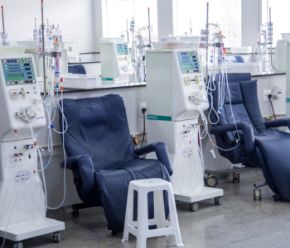
- Dialysis and outpatient settings. Underpads can be one more line on the recurring-supply list. See the dialysis facility disposable supply guide for how that list is organized from a procurement view.
- Any setting. Ask for case dimensions and weight, since a 500-count case of small pads and a 70-count case of large pads occupy very different shelf space.
Common mistakes
- Quoting by size alone without count, backing or absorbency wording.
- Comparing per-pad cost across different sizes.
- Reading "heavy absorbency" as a measured, comparable figure.
- Assuming "breathable" and "PE back sheet" describe the same construction.
- Ignoring whether the price is per bag, per pack or per case.
- Accepting a different size or count as a substitute without a written review.
Related ECSI Resources
Skilled nursing facility disposable supply purchasing
Medical supply UOM and case-pack conversion guide
Disposable dry wipes for healthcare facilities: a purchasing guide
Dialysis facility disposable supply procurement guide
Request an underpad quote
Send Essential Cares the current manufacturer number, specification and quantity, and the team can review available sourcing options. Include size, backing, count per case and the absorbency wording from your current spec. You can also browse the incontinence category.
View underpads Contact Essential CaresFrequently Asked Questions
How many underpads are in a case?
It varies by item. On the ECSI listings above the per-case totals are 500, 300, 100 and 70. Always confirm the count on the specific item and the unit the price applies to.
Is there a standard absorbency rating I can put on the RFQ?
We did not find one in the sources we reviewed. Write the manufacturer's stated descriptor and ask how it is measured, or specify the manufacturer part number and ask for the spec sheet.
Can I treat a breathable pad as a substitute for a poly-backed pad?
Not on the name alone. Compare the full specifications against your own requirement, and review any substitute in writing before it ships.
Sources
- AHPMA: Disposable Continence Product Testing (ISO 11948-1 described as the main international laboratory standard for disposable incontinence products; caution on using it as the main purchasing criterion; page addresses personal absorbent products).
Kevin Leoncio is an Account Representative at Essential Cares Supplies, Inc., supporting healthcare, government, and institutional customers with sourcing, product equivalency, procurement, and supply solutions.
 213-743-1401